



Industrial valve manufacturing process: from raw materials to final product
The industrial valve manufacturing process is a complex and meticulous process, from selecting raw materials to the final product. Tools and material handling techniques play an important role in creating valve components. Let's learn about the industrial valve manufacturing process in more detail.
Ordering and Design
The industrial valve manufacturing process begins with ordering from the customer and detailed design of the product. Once the design is approved, the manufacturer places orders for the necessary raw materials and materials. This includes collecting and purchasing raw materials from supply sources.
.jpg)
Inventory and Collection of Materials
Once enough raw materials are available, the materials need to be inventoried and compiled. Components and accessories should be inspected to ensure their completeness and quality before entering the manufacturing process.
Production process
The industrial valve manufacturing process includes many important steps such as cleaning, casting, machining, and surface treatment of valve parts. Casting and forging methods are commonly used to create key valve parts, including the valve stem, body, and seat. This includes cutting, forging, trimming, sandblasting, machining and surface treatment. This process can use cores to create parts with complex internal cavities.
Assembly and Quality Check
After creating the parts, the assembly process begins. The main components of the valve must be meticulously assembled to form the finished product. This process includes testing and ensuring the accuracy and functioning of the parts.
.jpg)
Check pressure
The final product must undergo pressure testing to ensure the tightness and safety of the valve. Hydrostatic pressure testing is an important part of this process, ensuring that the valve is capable of withstanding high pressures and has no leaks.
Quality control
Finally, all industrial valve products must undergo rigorous testing and quality control. This ensures that every part of the valve meets quality and safety standards. Manufacturers need to adhere to a rigorous quality control and testing process to ensure the final product is reliable and safe for industrial applications.
.jpg)
Thus, the industrial valve manufacturing process is a series of elaborate steps to ensure the quality and safety of the final product. It is this meticulousness and quality control that goes into the process that plays a key role in meeting the diverse needs of the industry and ensuring valve performance in real-world applications.
PHUC MINH ENGINEERING COMPANY LIMITED
Hotline: +84902800728
Tel: +842835352125
Email: info@pm-e.vn
Website: www.pm-e.vn
Related News
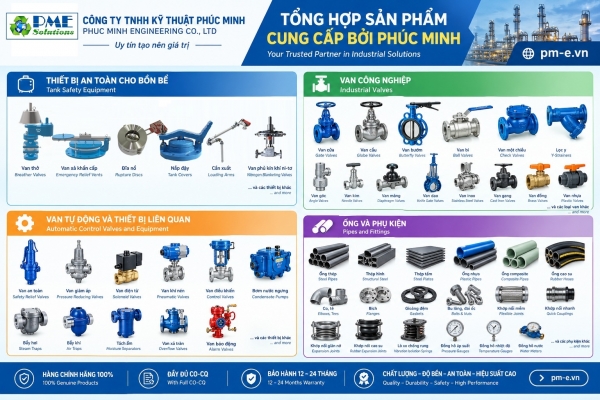
Overview of Products Supplied by Phuc Minh
13/10/2026
Below is the COMPREHENSIVE LIST OF MANUFACTURERS of valves, pipes, and fittings.
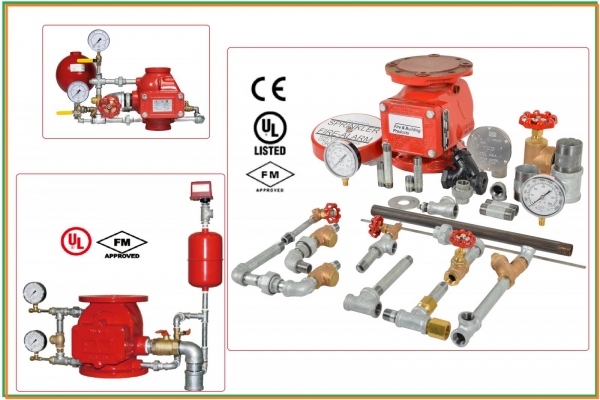
Professional Fire Protection Valve & Equipment Solutions – Leading Global Brands
24/03/2026
In any fire protection system, firefighting valves and water control equipment play a critical role in rapid response, system control, and the protection of life and property. Selecting products from world-leading brands that comply with international standards such as UL, FM, EN, and ISO ensures operational reliability, safety, and long-term performance.
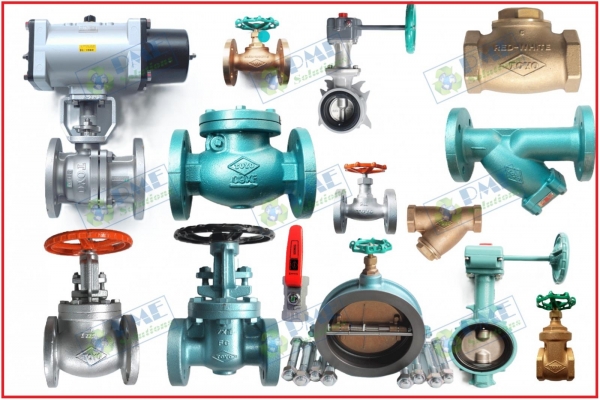
Toyo Valve Japan – Official Genuine Valves 2026 | Latest Price List
01/04/2026
Get the latest 2026 prices for genuine Toyo Valve Japan. Wide range of industrial Toyo valves, full CO & CQ, competitive prices. Contact us for professional guidance.
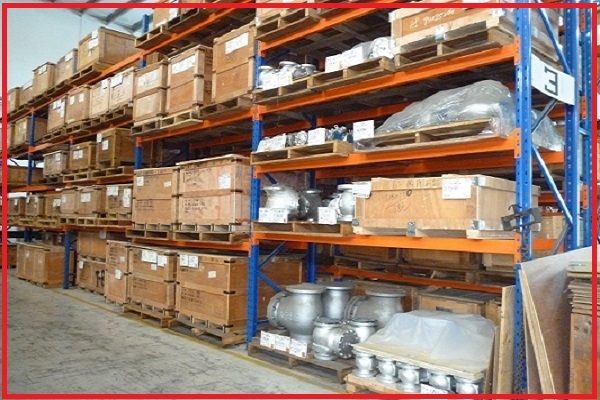
Industrial Valves
30/03/2026
Learn about industrial valves, types, applications, and latest prices. Contact Phuc Minh for high-quality valves and expert support.
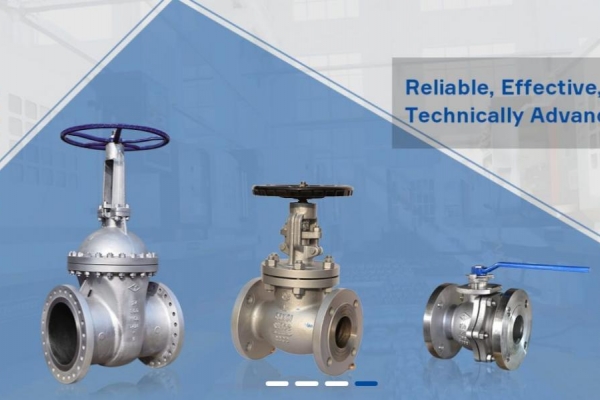
Yuanda Valve Price – Genuine Industrial Valves | PM-E.vn
31/03/2026
Get detailed Yuanda valve quotes in Vietnam from PM-E.vn. We provide a wide range of industrial valves: gate, globe, ball, butterfly, Y-strainer, and couplings. Large stock, fast delivery, competitive prices, complete CO/CQ. Contact 0907450506 – 0902720814.










About us

PHUC MINH ENGINEERING CO., LTD
Head Office: 92/38, No.12 St, Quarter 18, Binh Hung Hoa Ward, Ho Chi Minh City, Vietnam.
Tax Code: 0314405007
Tel: +842835352125
Fax: +842835350254
Email: info@pm-e.vn
Website: www.pm-e.vn
Quang Ngai Branch:
Address: 123/4 Vo Thi Sau, Chanh Lo, Quang Ngai, 840255, Vietnam
- Policies and regulations
- Payments
- Shipping and forwarding
- Warranty Policy
- Complaint handling process
- Exchanges and refunds
- Privacy Policy
Return Policy
Social network

.png)








Copyright © 20017 Copyright by Phuc Minh Technology Co., Ltd