



Frequently Asked Questions About Disc Steam Traps (Disc Trap / Thermodynamic Trap)
FREQUENTLY ASKED QUESTIONS ABOUT DISC STEAM TRAPS (DISC TRAP / THERMODYNAMIC TRAP)
Disc Steam Traps (Disc Trap / Thermodynamic Steam Trap) are among the most widely used steam traps in industrial steam systems today. These traps are compact, durable, and highly suitable for high-pressure steam applications.
Below are some of the most frequently asked questions to help users better understand and properly select disc-type steam traps.
1. What is a Disc Steam Trap?
A Disc Steam Trap (also called a Thermodynamic Steam Trap) is a device designed to automatically discharge condensate from steam systems without allowing valuable steam to escape.
The trap operates based on pressure and velocity differences between steam and condensate.
This type of steam trap is also commonly known as:
- Disc Trap
- Thermodynamic Trap
- Thermodynamic Steam Trap
- Disc Type Steam Trap
2. How Does a Disc Steam Trap Work?
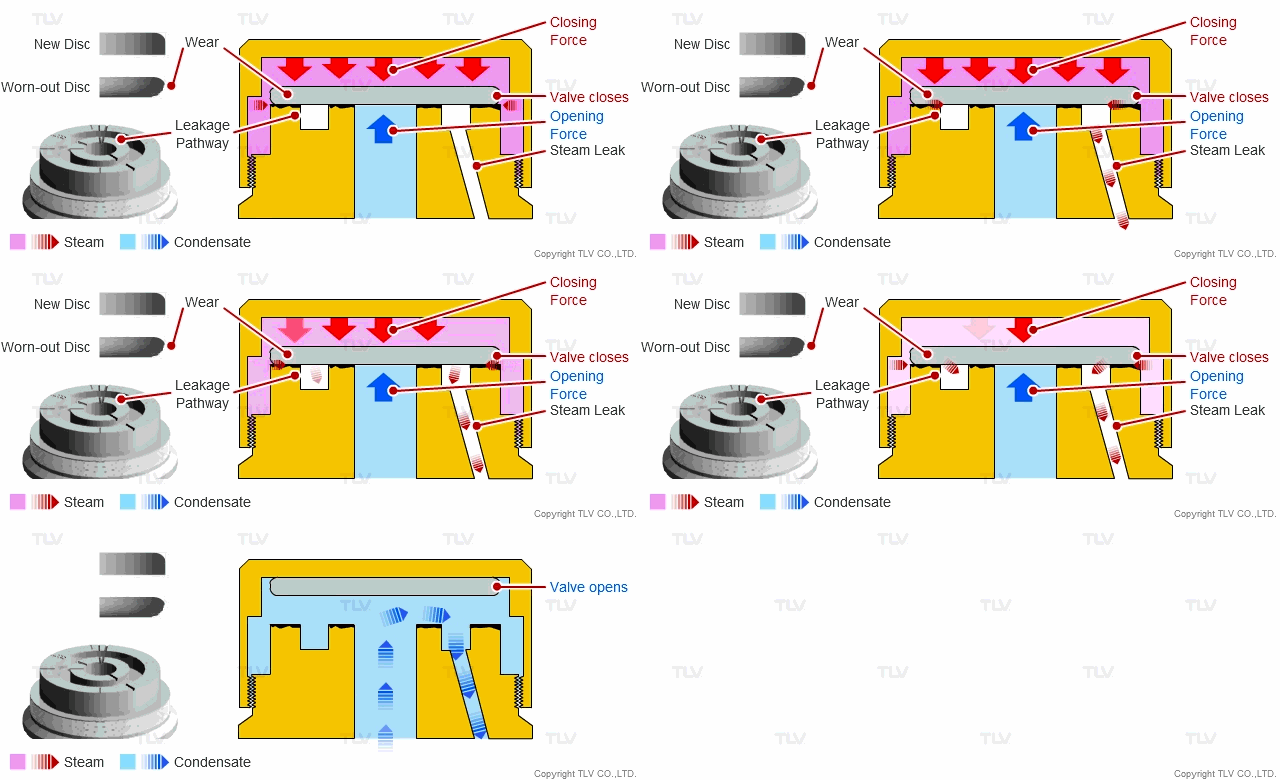
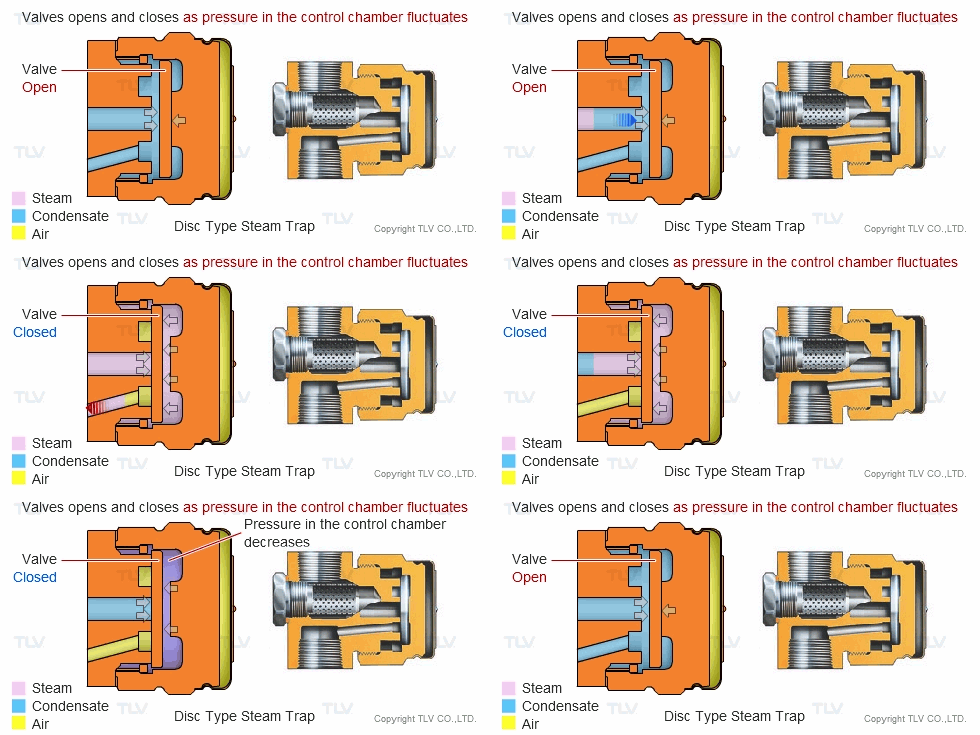
When condensate enters the trap:
- The disc lifts upward
- Condensate is discharged
When live steam reaches the trap:
- High steam velocity creates low pressure
- The disc is forced downward
- The discharge port closes to prevent steam loss
This opening and closing cycle happens automatically and continuously.
3. What Are the Advantages of Disc Steam Traps?
Compact Design
Ideal for installations with limited space.
High Pressure and Temperature Resistance
Suitable for demanding industrial steam systems.
Durable Construction
Few moving parts reduce wear and maintenance.
Excellent Water Hammer Resistance
Performs well under harsh steam conditions.
Cost-Effective
Lower investment and maintenance costs compared to some other steam trap types.
4. What Are the Disadvantages of Disc Steam Traps?
Despite their advantages, disc steam traps also have some limitations:
- Produce clicking sounds during operation
- Less suitable for very low condensate loads
- Sensitive to dirt and debris without proper filtration
- Performance may decrease under high back pressure
5. Where Are Disc Steam Traps Commonly Used?
Disc traps are commonly installed in:
- Main steam pipelines
- Steam tracing systems
- Industrial dryers
- High-pressure steam systems
- Food processing plants
- Textile factories
- Chemical plants
- Boiler systems
6. Should a Y-Strainer Be Installed Before the Steam Trap?
YES.
Installing a Y-strainer is strongly recommended.
A Y-strainer helps:
- Prevent dirt and debris from entering the trap
- Reduce disc wear
- Extend service life
- Minimize steam leakage risks
Typical installation includes:
- One Y-strainer before the steam trap
- Isolation valves before and after the trap for easier maintenance
7. Should Disc Steam Traps Be Installed Horizontally or Vertically?
Most disc steam traps should be installed horizontally for stable performance.
Some special models can be installed vertically, but manufacturer recommendations must always be followed.
Incorrect installation may cause:
- Poor condensate discharge
- Steam leakage
- Reduced service life
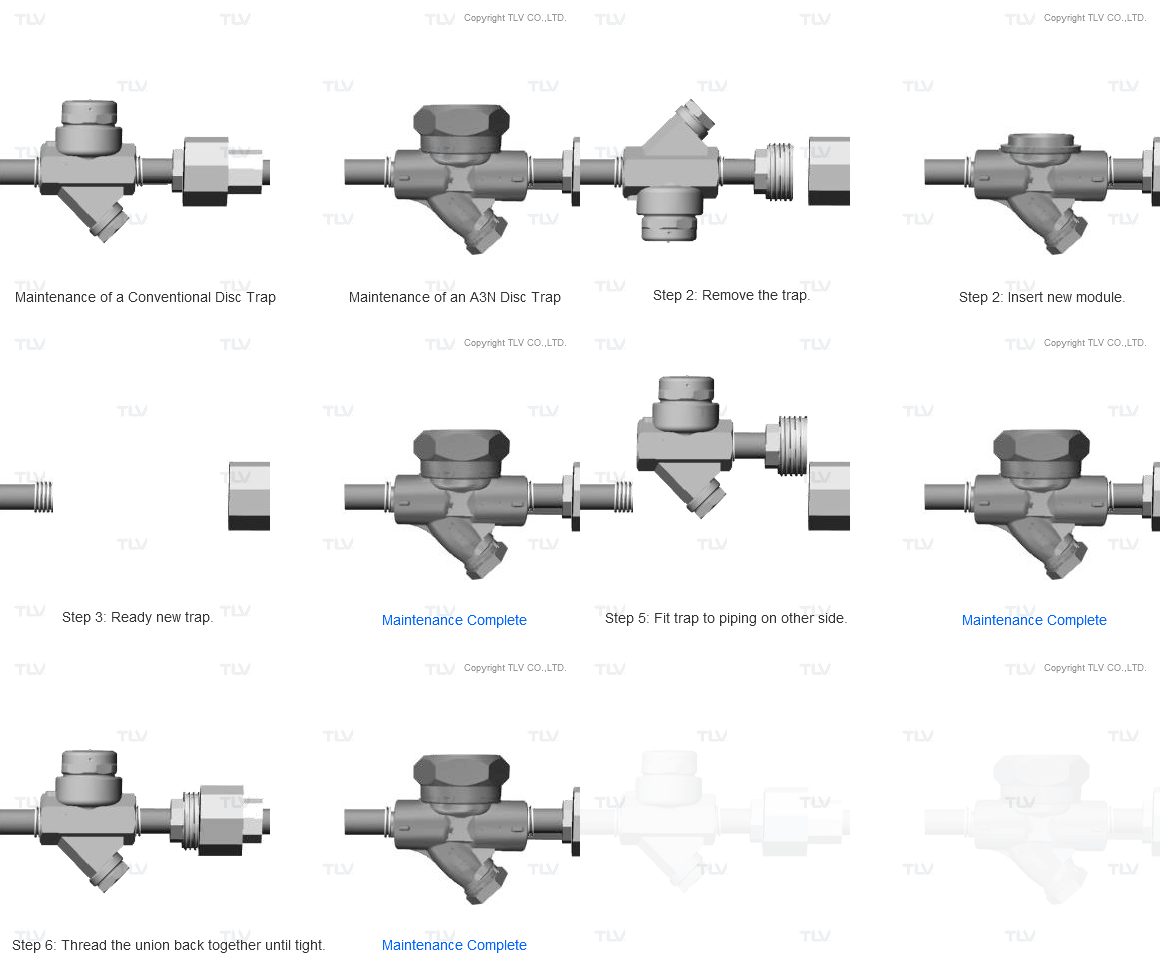
8. Why Does a Disc Steam Trap Leak Steam Continuously?
Common causes include:
- Worn disc
- Dirt or debris inside the trap
- Incorrect pressure conditions
- Wrong installation direction
- Missing Y-strainer
- Damaged seating surfaces
Continuous steam leakage can result in significant energy loss.
9. How Often Should Steam Traps Be Inspected?
Inspection frequency depends on operating conditions, but generally:
- Every 3–6 months is recommended
- Continuous-duty systems may require more frequent inspection
Inspection methods include:
- Ultrasonic testing
- Thermal imaging cameras
- Temperature measurement
- Sound monitoring
10. How to Select the Right Disc Steam Trap?
Key selection factors include:
- Working pressure
- Condensate load
- Operating temperature
- Pipe size
- Connection type (threaded or flanged)
- Body material
- Back pressure conditions
Selecting the wrong steam trap may lead to:
- Waterlogging
- Steam loss
- Reduced heat transfer efficiency
11. Which Brands of Disc Steam Traps Are Recommended?
Popular brands in the market include:
- Yoshitake
- TLV
- Miyawaki
- Armstrong
- Spirax Sarco
- Watson McDaniel
- VINVAL
It is recommended to choose products that are:
- Genuine and certified
- Supplied with CO-CQ documentation
- Properly matched to system requirements
- Supported by technical consultation
12. How Much Does a Disc Steam Trap Cost?
The price depends on:
- Brand
- Size
- Material
- Pressure rating
- Connection type
Japanese and European brands are often preferred for their durability and reliability.
13. Does PM-E Supply Disc Steam Traps?
PM-E specializes in supplying:
- Disc Steam Traps
- Thermodynamic Steam Traps
- Japanese Steam Traps
- Industrial steam valves
- Y-strainers for steam systems
PM-E provides:
- Genuine products
- Technical consultation
- Proper model selection support
- Nationwide delivery
Conclusion
Disc Steam Traps (Disc Trap / Thermodynamic Trap) are highly effective solutions for industrial steam systems thanks to their compact design, durability, and excellent performance under high-pressure conditions.
To maximize system efficiency and energy savings, users should:
- Select the correct steam trap type
- Install it properly
- Perform regular inspections
- Use genuine products
If you need support selecting the right steam trap for your industrial steam system, PM-E is ready to provide fast and professional technical assistance.
Related News
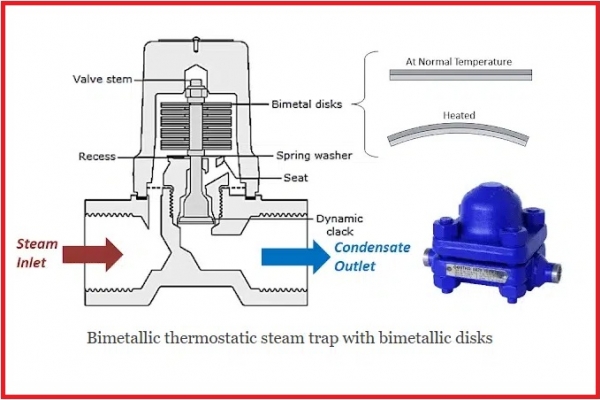
Frequently Asked Questions About Thermostatic Steam Traps
10/05/2026
Explore the most frequently asked questions about Thermostatic Steam Traps, including working principles, advantages, disadvantages, applications, installation methods, troubleshooting, and selection tips for industrial steam systems.
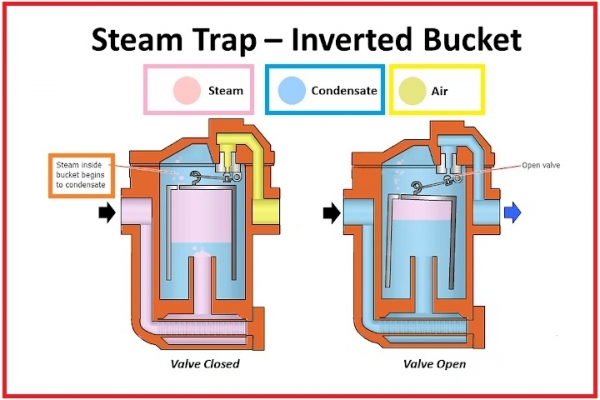
Frequently Asked Questions About Bucket Steam Traps (Bucket Trap / Inverted Bucket Steam Trap)
10/05/2026
Explore the most frequently asked questions about Bucket Steam Traps (Inverted Bucket Steam Traps), including working principles, advantages, disadvantages, applications, installation methods, troubleshooting, and selection tips for industrial steam systems.
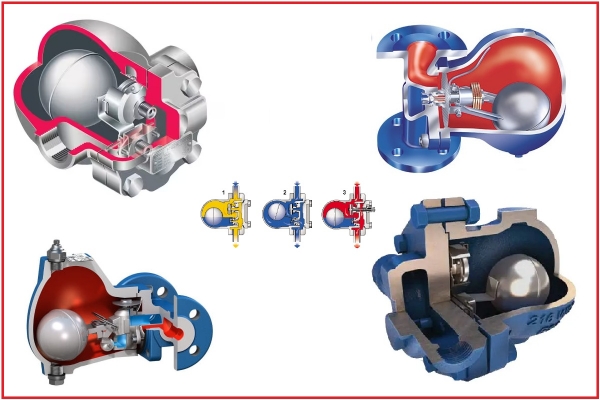
Frequently Asked Questions About Lever Float Steam Traps
10/05/2026
Discover the most frequently asked questions about Lever Float Steam Traps, including working principles, advantages, disadvantages, applications, installation methods, troubleshooting, and selection tips for industrial steam systems.
Frequently Asked Questions About Free Float Steam Traps
10/05/2026
Explore the most frequently asked questions about Free Float Steam Traps, including working principles, advantages, disadvantages, applications, installation methods, troubleshooting, and selection tips for industrial steam systems.

FAQ For Plastic Valve
30/03/2026
Q: The CLEAN PVC UNION BALL VALVE I bought is not compatible with another one I have. A: ┼ The CLEAN PVC UNION BALL Valve and the UNION SOCKET come in “A-TYPE” (the old model) and “B-TYPE” (the new model). These two types are not compatible with each other. ┼ On the other hand, the SOCKET TYPE from 65A to 100A is compatible with one another. To Distinguish from A-TYPE to B-TYPE: One is stamped with FLOW, and the other is not.








Vertical Multistage Pump
Contact


AWN Dredger Pump
Contact

AMG Sand Gravel Pump
Contact

AnPump Horizontal Slurry Pump
Contact
About us

PHUC MINH ENGINEERING CO., LTD
Head Office: 92/38, No.12 St, Quarter 18, Binh Hung Hoa Ward, Ho Chi Minh City, Vietnam.
Tax Code: 0314405007
Tel: +842835352125
Fax: +842835350254
Email: info@pm-e.vn
Website: www.pm-e.vn
Quang Ngai Branch:
Address: 123/4 Vo Thi Sau, Chanh Lo, Quang Ngai, 840255, Vietnam
- Policies and regulations
- Payments
- Shipping and forwarding
- Warranty Policy
- Complaint handling process
- Exchanges and refunds
- Privacy Policy
Return Policy
Social network

.png)








Copyright © 20017 Copyright by Phuc Minh Technology Co., Ltd