



What Is a PID Controller? Principles, Structure & Real Industrial Applications (2025)
What Is a PID Controller? Principles, Structure & Real Industrial Applications (2025)
In every modern factory—from steam systems, compressed air, HVAC, chemicals, food and beverage to pharmaceuticals—the PID Controller plays an extremely important role in keeping systems stable, safe, and energy-efficient.
A PID controller is considered the “brain” of an automation system. It continuously maintains the Process Value (PV) close to the Setpoint (SP), minimizes fluctuations, and optimizes overall performance.
This article from Phuc Minh Engineering Co., Ltd. will help you clearly understand:
-
What a PID Controller is
-
Its structure and working principles
-
When your plant should use a PID
-
Real industrial applications: steam – water – air – temperature – flow
-
Key benefits of PID control
-
How to select the correct PID controller for industrial use
✅ 1. What Is a PID Controller?
A PID Controller (Proportional – Integral – Derivative) is an automatic control device used to maintain stable pressure, flow, temperature, water level, and many other process variables. It does this by continuously calculating the error value and adjusting actuators such as:
-
Linear control valves
-
Pneumatic control valves
-
VFDs (Variable Frequency Drives) for pumps and fans
-
Heaters and electric heating elements
-
Servo motors
A PID controller ensures the system operates with stability – precision – energy efficiency, especially in processes requiring high accuracy.
✅ 2. Why Do Factories Need PID Controllers?
PID is the most widely used control standard in industrial automation (over 90% of systems today). Reasons include:
⭐ 2.1 Minimizes System Oscillation
Without a PID controller:
-
Pressure can spike suddenly
-
Pump flow fluctuates continuously
-
Temperature swings widely → directly affecting product quality
PID provides smooth, stable, non-lagging control.
⭐ 2.2 Optimizes Energy Consumption
High-energy-consumption systems include:
-
Boilers
-
Air compressors
-
Pressure boosting pumps
-
Chillers
With PID tuning:
➡ Plants can save 8–20% energy every month.
⭐ 2.3 Improves Product Quality
In food, pharmaceutical, and chemical industries, even a 1–2°C temperature deviation can ruin an entire batch.
PID control keeps process values consistently stable.
⭐ 2.4 Extends Equipment Lifespan
Valves, pumps, motors no longer operate with sudden ON/OFF actions → reduced breakdowns.
⭐ 2.5 Compatible With Almost All Industrial Devices
PID controllers can work with:
-
Analog signals (4–20mA, 0–10V)
-
Digital signals
-
Relay on/off
-
Modbus RS485
✅ 3. Structure of a PID Controller
A standard industrial PID controller consists of:
✅ 1. Central Processing Unit (CPU)
Calculates the control output using the P–I–D algorithm.
✅ 2. Input Section
Receives sensor signals:
-
Pressure: 4–20 mA
-
Flow: pulse / analog
-
Temperature: PT100, Thermocouple
-
Level: ultrasonic, radar
✅ 3. Output Section
Controls actuators such as:
-
Linear valves: 4–20 mA
-
Pneumatic valves: 3–15 psi
-
VFDs: 0–10V
-
Relay ON/OFF
✅ 4. Display Panel
Shows PV, SP, and Output %.
✅ 5. Parameter Settings
Allows adjustment of:
-
Setpoint
-
Kp, Ki, Kd
-
Deadband
-
Ramp-up / Ramp-down
✅ 4. Working Principle of a PID Controller
PID calculates:
Output = P + I + D
Where:
✅ P – Proportional
Responds to the immediate error between PV and SP.
Larger error → stronger corrective signal.
✅ I – Integral
Eliminates long-term, accumulated error.
Ensures PV meets SP precisely.
✅ D – Derivative
Predicts future system behavior.
Reduces overshoot and stabilizes transitions.
➡ The combination of all three provides smooth – fast – precise – stable control.
✅ 5. Real Industrial Applications of PID Controllers
⭐ 5.1 Pressure Control for Pressure Reducing Valves (PRV)
PID reads outlet pressure and adjusts:
-
Linear valves
-
Pilot-operated control valves
Used in:
-
Steam systems
-
Compressed air
-
Gas, N₂, CO₂
Keeps pressure stable within ±0.05 bar.
⭐ 5.2 Flow Control for Industrial Water Pumps
PID + VFD enables:
-
Smooth pump speed adjustment
-
Reduced system stress
-
20–35% electricity savings
Applications:
-
Industrial water supply
-
HVAC – Chiller systems
-
Food & beverage plants
⭐ 5.3 Boiler & Furnace Temperature Control
PID keeps combustion temperature stable.
Benefits:
-
Fuel savings
-
Reduced soot
-
Steady steam output
⭐ 5.4 Closed-Loop Control Systems
PID is the core of all closed-loop processes:
-
pH control
-
Level control
-
Fan speed control
-
Humidity control
-
Motor speed control
✅ 6. Key Benefits of Using PID in Industrial Plants
| Benefit | Description |
|---|---|
| Reduce pressure/flow oscillation | Stable operation, no shock |
| Optimize energy | 8–20% savings on electricity, steam, air |
| Increase process stability | Higher and more consistent product quality |
| Reduce equipment damage | Smooth valve/pump operation |
| Easy integration with SCADA/IoT | Remote monitoring, data logging |
| Full automation | No manual adjustment needed |
✅ 7. How to Select the Right PID Controller
✅ 1. Type of process
-
Pressure
-
Flow
-
Temperature
-
Level
✅ 2. Input type
-
4–20 mA
-
PT100
-
Thermocouple
-
Pulse
✅ 3. Output type
-
4–20 mA (analog)
-
Relay
-
Pneumatic
✅ 4. Preferred manufacturers
Common brands:
-
Omron
-
Autonics
-
Yokogawa
-
Siemens
-
ABB
✅ 5. Noise immunity & stability
Critical for steam and compressed air applications.
✅ 6. Technical support team
Phuc Minh provides:
✅ PID selection consulting
✅ Kp–Ki–Kd tuning guidance
✅ Installation – commissioning – calibration
✅ SCADA integration
✅ 8. PID Controller – The Optimal Solution for Industry 4.0
PID controllers are essential in modern automation:
-
Energy saving
-
Fewer system failures
-
Increased productivity
-
Higher product quality
A plant without a PID controller operates “by feel”—inefficient, unstable, and uncompetitive.
✅ 9. PID Controller Consultation – Contact Phuc Minh
PHUC MINH ENGINEERING CO., LTD.
📞 Hotline: 0902 800 728 – 0907 450 506
📧 Email: info@pm-e.vn
🌐 Website: https://pm-e.vnWhat Is a PID Controller? Principles, Structure & Real Industrial Applications (2025)
Related News
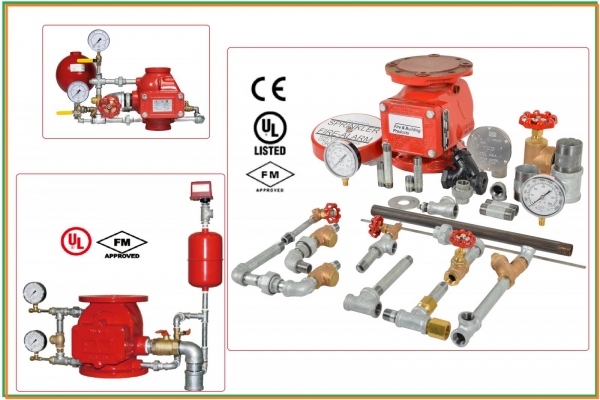
Professional Fire Protection Valve & Equipment Solutions – Leading Global Brands
24/03/2026
In any fire protection system, firefighting valves and water control equipment play a critical role in rapid response, system control, and the protection of life and property. Selecting products from world-leading brands that comply with international standards such as UL, FM, EN, and ISO ensures operational reliability, safety, and long-term performance.
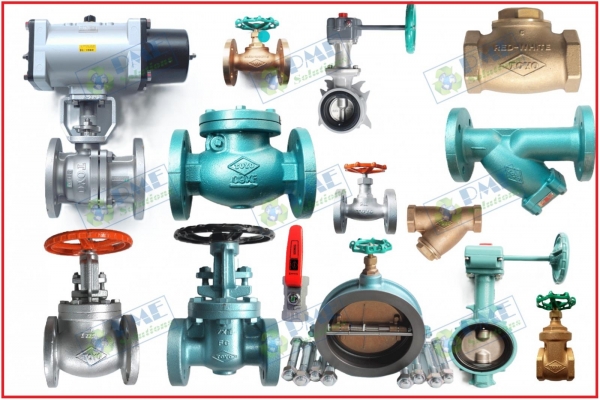
Toyo Valve Japan – Official Genuine Valves 2026 | Latest Price List
01/04/2026
Get the latest 2026 prices for genuine Toyo Valve Japan. Wide range of industrial Toyo valves, full CO & CQ, competitive prices. Contact us for professional guidance.
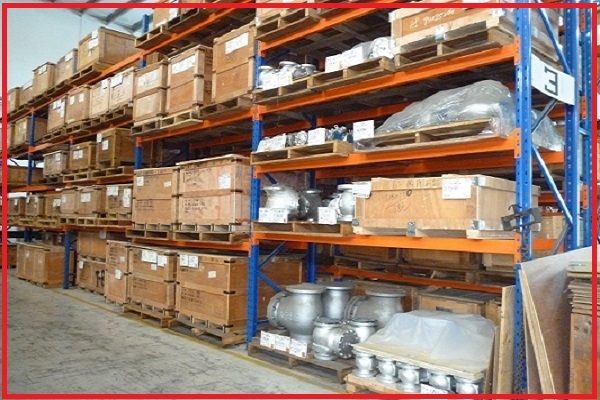
Industrial Valves
30/03/2026
Learn about industrial valves, types, applications, and latest prices. Contact Phuc Minh for high-quality valves and expert support.
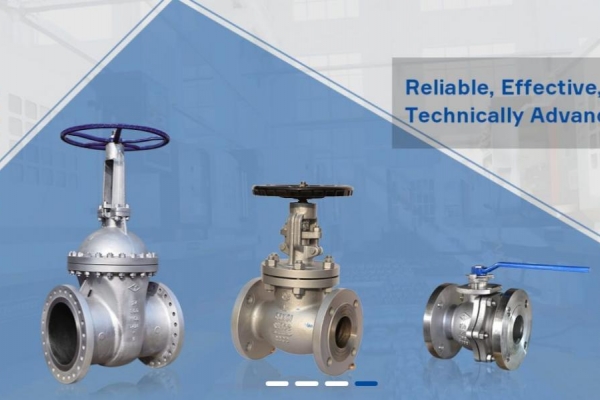
Yuanda Valve Price – Genuine Industrial Valves | PM-E.vn
31/03/2026
Get detailed Yuanda valve quotes in Vietnam from PM-E.vn. We provide a wide range of industrial valves: gate, globe, ball, butterfly, Y-strainer, and couplings. Large stock, fast delivery, competitive prices, complete CO/CQ. Contact 0907450506 – 0902720814.
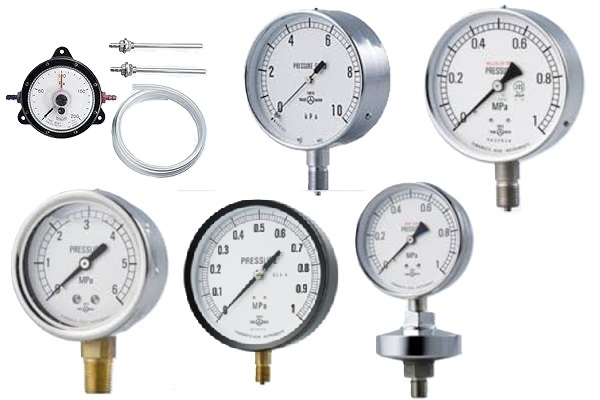
Quick Quote: Yamamoto Keiki – Genuine Japanese Pressure & Temperature Gauges for Industry
31/03/2026
Discover Yamamoto Keiki pressure gauges, thermometers, and pressure control devices – 100% made in Japan, highly accurate and durable, widely used in boilers, oil & gas, chemical, food & pharmaceutical, power plants, and HVAC systems.








Vertical Multistage Pump
Contact


AWN Dredger Pump
Contact

AMG Sand Gravel Pump
Contact

AnPump Horizontal Slurry Pump
Contact
About us

PHUC MINH ENGINEERING CO., LTD
Head Office: 92/38, No.12 St, Quarter 18, Binh Hung Hoa Ward, Ho Chi Minh City, Vietnam.
Tax Code: 0314405007
Tel: +842835352125
Fax: +842835350254
Email: info@pm-e.vn
Website: www.pm-e.vn
Quang Ngai Branch:
Address: 123/4 Vo Thi Sau, Chanh Lo, Quang Ngai, 840255, Vietnam
- Policies and regulations
- Payments
- Shipping and forwarding
- Warranty Policy
- Complaint handling process
- Exchanges and refunds
- Privacy Policy
Return Policy
Social network

.png)








Copyright © 20017 Copyright by Phuc Minh Technology Co., Ltd